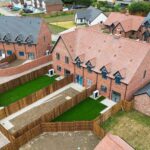

Building resilient communities through joined-up development

Sustainable living is moving beyond being viewed simply through an environmental, social and governance lens. It is becoming a practical response to some of the UK’s most significant long-term challenges, including housing undersupply, an ageing population, economic pressure, changing expectations around how people live and the transition to a lower-carbon economy.
For investors, this creates opportunities across housing, later living, care, renewable energy and supporting infrastructure. However, sustainability credentials alone are not enough. From an investment perspective, the critical question is whether capital is being connected to projects that meet genuine demand, are supported by appropriate assets and can be delivered and operated effectively over the long term.
The UK Government’s Net Zero Investor Prospectus reinforces the scale of this transition by setting out opportunities for private capital across energy, buildings, infrastructure and the wider economy. Significant investment will be required, but long-term value will depend on the strength of the projects, partnerships and delivery models behind it.
Demographic change is reshaping housing demand
One of the clearest drivers is the UK’s ageing population. The Local Government Association estimates that more than 70% of projected household growth between 2014 and 2039 will be made up of households containing someone aged 60 or over.
The Older People’s Housing Taskforce has also identified a substantial shortfall in suitable later-living accommodation. Its report estimates that between 30,000 and 50,000 new later-living homes may be required each year, compared with approximately 7,000 currently being delivered.
This is not simply about building more homes. It is about providing a broader range of high-quality options that allow people to live independently for longer, access appropriate support when needed and remain connected to their communities. It also requires a better understanding of what people want from later life, including greater choice, flexibility and access to well-designed shared spaces.
Similar pressures exist across social and affordable housing, where long-term undersupply continues to place pressure on individuals, families, local authorities and housing providers. This creates a clear need for well-designed, energy-efficient homes that can be delivered efficiently and supported by sustainable long-term operating models.
Modern methods of construction, including modular development, can form part of the response. When used appropriately, they have the potential to shorten on-site programmes, improve consistency and reduce disruption. They may also provide greater flexibility across different sites and housing requirements.
However, the construction method should never be considered in isolation. Successful delivery still depends on suitable land, planning, infrastructure, funding and a clear understanding of how the completed homes will be used and managed. Sustainable development is ultimately about creating places that work for people, rather than simply adopting a particular product or technology.
From individual developments to connected communities
Housing cannot be separated from energy, care, transport, green space and community infrastructure. A development may include energy-efficient buildings, but its long-term sustainability will also be influenced by how people move around, access services, use energy and connect with their surroundings.
The same principle applies to nature-led and leisure communities. Sustainable development is about more than the environmental specification of an individual building. It includes sensitive land use, biodiversity, responsible energy and water management, local supply chains and the creation of places where people genuinely want to live, work or spend time.
This more connected approach can also create better outcomes for the surrounding area. Working with local businesses, understanding the existing landscape and considering the long-term operation of a site from the outset can help a development become part of its community, rather than something imposed upon it.
The strongest projects therefore begin with the needs of the people who will live in, work in or visit them. Technology, renewable energy and modern construction methods should support that purpose rather than determine it.
The importance of integrated delivery
One structural element that has shifted recently is the move away from standalone developments towards integrated sustainable living platforms. These platforms can bring together specialist expertise across development management, construction, housing, care, renewable energy and long-term site operations.
This can provide greater continuity from the early planning and design stages through to delivery and ongoing management. It can also reduce some of the fragmentation that occurs when each part of a development is planned or delivered separately, without sufficient consideration of how the completed community will operate.
For investors, the quality of the underlying assets is only one part of the assessment. Equal attention should be given to the experience of the team, the strength of its partnerships, the viability of its plans and the governance structures in place.
A credible platform should be able to demonstrate not only what it intends to develop, but how opportunities will be sourced, assessed, funded, delivered and managed. Integration may provide broader exposure across complementary sectors, but it does not remove development, operational or investment risk. Each opportunity must still be assessed on its own merits.
A long-term opportunity requiring a disciplined approach
The scale of the transition is significant. Innovate UK has previously estimated that the local projects required to support the UK’s Net Zero ambitions could require approximately £500 billion of investment over the coming years.
Yet scale alone does not make every project investable. The strongest opportunities are likely to be those supported by genuine demand, appropriate assets, experienced delivery teams and transparent commercial models.
Sustainable living should not be viewed as a single asset class or a short-term investment trend. It is a growing ecosystem spanning housing, later living, care, energy, construction and placemaking.
For sophisticated investors, the sector offers exposure to several long-term structural themes. The opportunity lies in identifying the platforms capable of bringing those elements together to create well-designed, responsibly delivered and commercially sustainable communities.