From health monitoring panic rooms to biometric sensors in every corner, by 2071 our homes could virtually run themselves.
With the recent announcement of the 2025 ban on gas boilers and the government’s focus on slashing carbon emissions, making positive changes to live more sustainably is a priority. But just how could our homes look in 50 years’ time?
Efficient living space that adapts to individual needs
A centralised combined utility that supports heating, electricity and air conditioning could help to make energy consumption much more efficient and sustainable. The home will be entirely connected, including all kitchen, bathroom and electrical appliances and heating devices. This could allow for a consolidation of energy consumption data which in turn will improve energy efficiency.
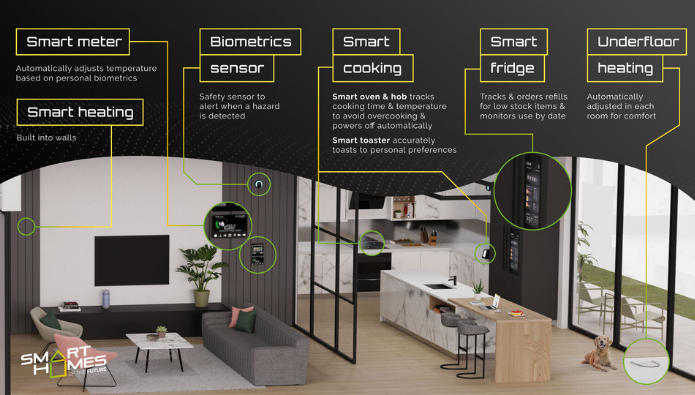
Smart meters will incorporate data from sensor technology embedded in clothing, accessories and furniture. The meters will dynamically adjust based on your personal biometrics, meaning that each room in your home will always be at the optimum temperature to suit your comfort levels, whether that’s staying cool whilst working out in your living room or keeping warm at bedtime.
Instead of traditional radiators and towel rails taking up space, heating could be embedded within the structure of your house, including the walls, floors and around the window to ensure efficiency.
Full automation of all electrical appliances
From kitchens to entertainment, all electrical devices could automatically power down when not in use and when electricity is most expensive. Solar panels could be replaced by roof tiles with solar technology embedded in order to effectively capture and store energy to power the home.

In the kitchen, you won’t need to worry if cooking isn’t your strong point, smart kitchen appliances could do all the hard work for you. From ovens and hobs that track ingredients and cooking temperatures to ensure that you never over or under cook a meal, to a fridge that automatically restocks and alerts you to out-of-date food, your kitchen could take all the hassle out of preparing meals.
Bathrooms could include smart showers that automatically turn on as you enter and mirrors that instantly capture and display relevant information about an individual’s current health state.
Homes could be equipped with panic rooms
Homes could be built with a basement panic room for added security and peace of mind in case of an emergency.
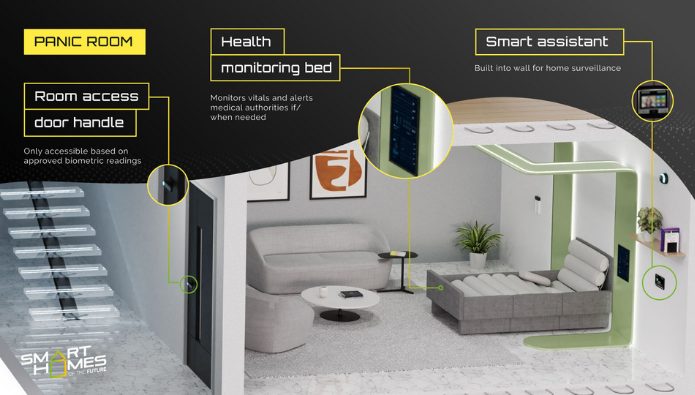
Panic rooms could include reinforced windows and doors, a smart assistant built into the wall for home surveillance and a health monitoring bed that observes health vitals and alerts medical authorities when needed.
For security purposes, the room could only be accessible based on approved biometric readings for individuals living in the house.
Homes will be more secure than ever before
Forget double locking your home and leaving your curtains closed when you leave the house, by 2071 homes will reach optimum levels of security and safety features.
Each room of the home could be fitted with biometric sensors that detect all movement and recognise when individuals walk into a room, with entry to certain rooms only granted based on approved readings. You could be automatically alerted of any potential hazards, such as a young child entering a room alone, leaking pipes or solar panels not charging.
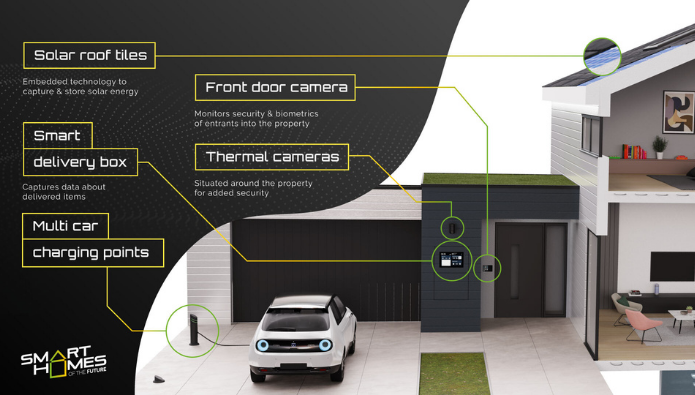
In addition, every person that enters your home could have their biometrics scanned and security checks could automatically be carried out to capture relevant data.
Thermal cameras could surround the property and entrances to the home could include video displays so you can monitor activity remotely. Each home could also be equipped with a smart delivery box that will capture and store the data of all packages received.
Although 50 years may seem a long way off right now, there are smart devices and technologies available in 2021 that can help us to lead a more efficient and eco-friendly life.
For more information on the smart home tech you should be investing in, you can view Rointe’s useful guide here.
*Cecilia Harvey is the founder of Tech Woman Today.